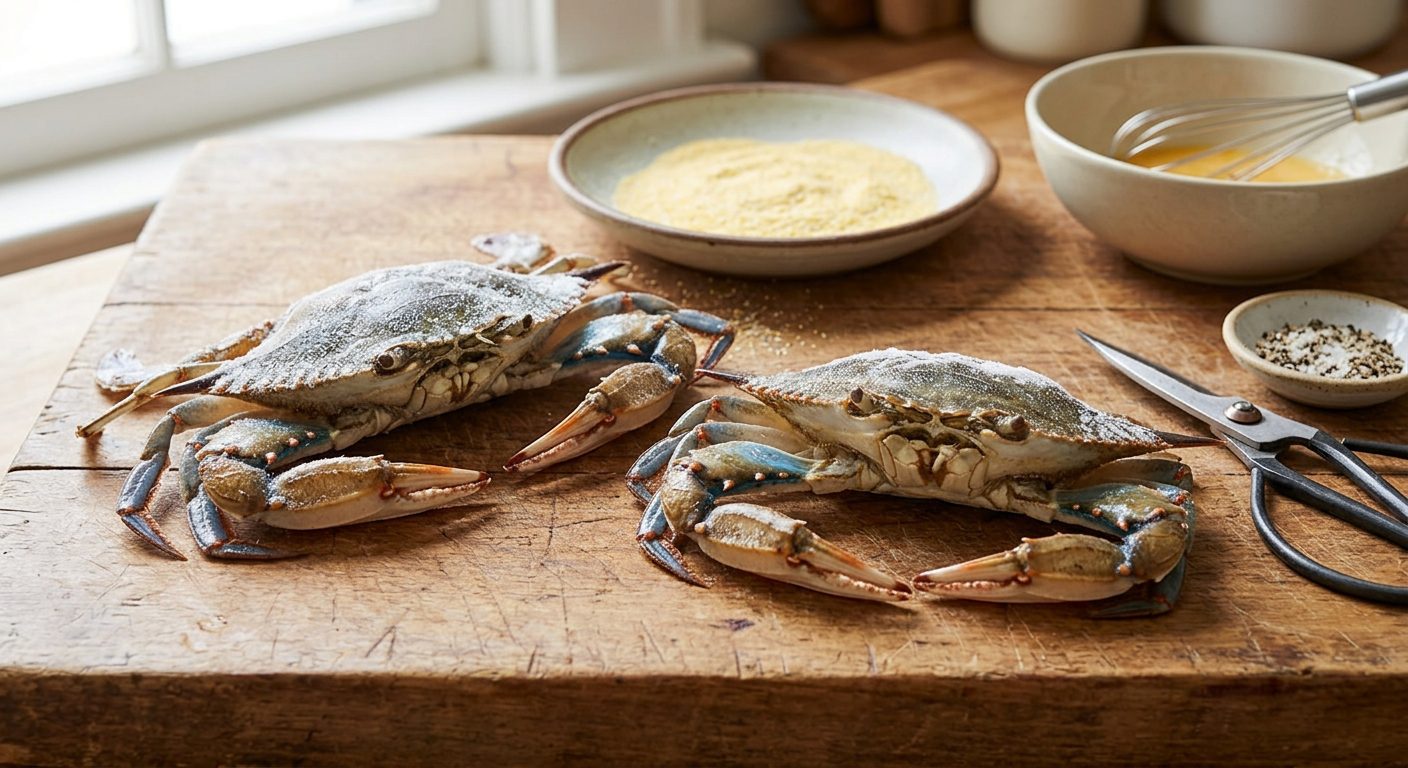
Frozen Soft Crabs Explained Storage, Preparation, and Year-Round Maryland Seafood Enjoyment
Soft-shell crab is one of the most distinctive ways to enjoy Maryland blue crab. Unlike traditional hard-shell crabs, soft crabs are harvested shortly after the crab sheds its old shell, while the newly formed shell is still soft and flexible. That narrow biological window makes fresh soft crabs highly seasonal and particularly time-sensitive. Freezing provides another option by allowing properly handled soft crabs to be preserved for later preparation. For customers looking for frozen soft crabs Baltimore, understanding how the product is harvested, packaged, stored, cleaned, and cooked can make a significant difference in the final meal. Cravin’ Crabs in Halethorpe currently offers both live and frozen soft crabs. Its dedicated soft-crab information explains that some soft crabs are frozen shortly after harvesting and can safely remain frozen for up to three months. The business also explains that its soft crabs are not cleaned before freezing, meaning customers should clean them shortly before cooking. That process connects a traditional Chesapeake seafood specialty with the practical convenience of home cooking.
What Are Frozen Soft Crabs?
A frozen soft-shell crab begins as a blue crab that has recently completed its molt.
Blue crabs grow by shedding their hard outer shells. Immediately after the molt, the new shell is pliable and easily stretched. Maryland DNR identifies a blue crab in this stage as a soft crab or soft-shell crab. The new shell begins hardening within hours, with a paper-shell stage developing within about 12 hours and the shell becoming fully hard over the following several days. This creates a very limited window in which the crab has the characteristics associated with soft-shell crab. Cravin’ Crabs explains that its veteran watermen monitor molting crabs continuously and remove them from the water after the crab emerges from the old shell. Some are then packaged live, while others are immediately frozen.
Freezing therefore does not turn a hard crab into a soft crab.
The crab must already be in the soft-shell stage when it is properly harvested and preserved.
Why Are Soft Shell Crabs Frozen?
The natural availability of soft crabs is closely connected to the blue crab’s molting cycle.
Unlike hard-shell crabs, soft crabs cannot simply be harvested at any time of year in unlimited quantities. They depend on individual crabs reaching the appropriate stage of development.
Maryland DNR describes blue crabs as being harvested in several forms, including hard-shell crabs, peelers immediately before molting, and soft-shell crabs immediately after molting.
Freezing provides a way to preserve properly harvested soft crabs for later use.
For customers, that means the opportunity to enjoy a soft-shell crab preparation outside the exact moment when the crab was harvested.
It also gives seafood businesses another way to handle a highly time-sensitive product.
How Cravin’ Crabs Handles Frozen Soft Crabs
The handling process begins before the crab is frozen.
Cravin’ Crabs explains that its watermen monitor molting crabs day and night and remove them from the water after the molt. The crabs are then taken to a clean indoor facility, where some are packaged live and others are immediately frozen.
The timing is important because a soft crab that remains in the water begins progressing toward a harder shell.
According to Cravin’ Crabs, once the soft crab is removed from the water, it loses the ability to continue hardening its shell in the same way. The company says this helps preserve the characteristics desired in a soft crab.
This is one of the reasons the term Maryland frozen soft crabs should not be interpreted simply as “blue crabs that were frozen.”
The stage at which the crab is harvested matters.
How Long Can Frozen Soft Crabs Be Stored?
Cravin’ Crabs states that its soft crabs can safely remain frozen for up to three months.
For customers purchasing frozen soft crabs, this creates flexibility.
You do not necessarily need to cook the crabs immediately after purchase. Instead, they can be stored in the freezer and prepared when you are ready, provided they remain properly frozen and are handled according to appropriate food-safety practices.
However, “up to three months” should be understood as the supplier’s stated guidance for its product rather than a universal guarantee for every frozen soft crab under every storage condition.
Freezer temperature, packaging quality, handling before freezing, and temperature stability can all affect seafood quality.
For the best eating experience, avoid unnecessary temperature fluctuations and follow the supplier’s storage instructions.
Soft Crab Storage: Keeping Frozen Crabs in Good Condition
Proper soft crab storage starts with maintaining a consistently cold freezer.
If the crabs are already commercially packaged and frozen, keep them frozen until you are ready to prepare them.
Avoid repeatedly removing and refreezing seafood.
Repeated temperature changes can negatively affect texture and overall quality.
It is also useful to organize frozen seafood so that packages are clearly identified and older items can be used before newer purchases. This simple approach helps prevent forgotten seafood from remaining in the freezer beyond the recommended storage period.
Cravin’ Crabs specifically states that its soft crabs can remain frozen for up to three months.
If you have questions about a specific package, storage duration, or current product handling, contact the seafood business directly rather than assuming that all frozen soft crabs have identical storage requirements.
How Should Frozen Soft Crabs Be Thawed?
If you are preparing cooking frozen soft crabs at home, the first step is to thaw them appropriately.
For food safety and quality, frozen seafood is generally best thawed under controlled refrigeration rather than left sitting at room temperature.
Plan ahead.
Move the frozen soft crabs from the freezer to the refrigerator with enough time for them to thaw while remaining cold.
Do not assume that a frozen crab should be cooked immediately from frozen unless the supplier specifically provides instructions for doing so.
Once thawed, handle the crabs carefully because the soft shell is delicate.
The goal is to preserve the crab’s texture while preparing it for cleaning and cooking.
Why Cravin’ Crabs Says Soft Crabs Should Be Cleaned Before Cooking
One of the most important details about Cravin’ Crabs’ frozen soft crabs is that they are not cleaned before freezing.
The company specifically explains that soft crabs are cleaned just before cooking. It says cleaning a crab before freezing could allow juices to escape and affect flavor.
That means buying a frozen soft crab does not mean the preparation process is finished.
You still need to clean the crab before placing it in the pan, oven, or other cooking setup.
For first-time buyers, this is worth understanding before ordering.
A properly handled frozen soft crab is a convenient seafood product, but it still requires basic preparation.
Soft Crab Preparation: How to Clean a Frozen Soft Crab
Soft crab preparation begins with careful cleaning.
Cravin’ Crabs recommends using sanitized scissors to make a V-shaped cut around the front portion of the crab to remove the area containing the eyes and mouth. The sides of the top covering are then lifted so the internal gill structures can be removed.
The underside is cleaned next.
The apron is opened, and attached material is removed. Cravin’ Crabs notes that removing the apron completely can be a matter of personal preference.
This process should be completed shortly before cooking.
Because soft crabs are delicate, avoid excessive handling once the cleaning is complete.
The cleaned crab can then be prepared according to your chosen recipe.
Cooking Frozen Soft Crabs at Home
Once thawed and cleaned, frozen soft crabs can be prepared in several ways.
Cravin’ Crabs provides a simple pan-frying method.
The business recommends coating the cleaned soft crab in seasoned all-purpose flour, dipping it in an egg wash, and then applying another coating of the flour mixture. It also suggests cornmeal as an alternative for customers who prefer a crispier coating.
The coated crab is then cooked in a buttered or oiled pan over medium-high heat until lightly golden brown.
Cravin’ Crabs gives approximately five minutes as a cooking time for this preparation, but actual cooking time can vary according to crab size, pan temperature, coating, and other cooking conditions.
The objective is a properly cooked crab with a crisp exterior and tender seafood inside.
A Simple Frozen Soft Crab Cooking Method
For customers trying frozen soft crabs at home for the first time, the process can be broken down into a few stages:
- Keep the soft crabs frozen until you are ready to prepare them.
- Thaw them under controlled refrigeration.
- Clean the crabs shortly before cooking.
- Remove the front section and internal gill structures as appropriate.
- Clean the underside and apron.
- Coat the crab according to your preferred recipe.
- Cook until properly done and lightly browned when using the pan-frying method.
- Serve immediately.
Cravin’ Crabs’ own recipe uses flour, egg wash, and butter or oil, with cornmeal offered as an alternative coating.
You can adapt the recipe to your preferred cooking style while maintaining the essential cleaning and handling steps.
Why Frozen Soft Crabs Can Still Be Part of a Maryland Seafood Tradition
Freezing does not remove the Chesapeake connection from a properly harvested soft crab.
The defining feature is the stage at which the crab was harvested.
Maryland DNR explains that blue crabs grow through molting and that immediately after the molt the new shell is pliable. That stage is specifically known as the soft-shell crab stage.
Cravin’ Crabs’ watermen monitor that process and freeze some of the soft crabs after harvesting.
The frozen product therefore represents a preserved moment in the blue crab’s natural growth cycle.
For customers in Baltimore and surrounding communities, that makes frozen soft crabs an interesting way to bring a specialized Chesapeake seafood product into a home kitchen.
Frozen Blue Crabs vs. Frozen Soft Crabs
The phrase frozen blue crabs can be confusing because it does not necessarily mean frozen soft-shell crabs.
A blue crab can be harvested and handled at different stages.
A traditional hard-shell blue crab has a fully hardened exterior. A soft-shell crab has recently completed a molt and retains a pliable new shell.
Freezing a hard crab does not turn it into a soft crab.
Likewise, a soft crab must already be in the soft-shell stage when harvested if it is going to be sold as a frozen soft-shell crab.
This distinction is especially important when shopping for seafood online or reading a seafood menu.
Look for the specific term “soft crab” or “soft-shell crab” rather than assuming that any frozen blue crab is equivalent.
Chesapeake Soft Crabs and the Natural Molting Process
The story behind Chesapeake soft crabs begins with blue crab biology.
Maryland DNR explains that a crab develops a new shell underneath the old one before molting. As the new shell forms, a visible line develops around the margins of the swimming paddles. When that line changes color, the crab enters the peeler or shedder stage.
The crab then sheds its old shell.
Immediately afterward, the new shell is soft and can expand as the crab takes in water.
DNR states that the entire shedding process takes approximately two to three hours and that the new shell begins hardening within about two hours after the shed.
That explains why commercial soft-crab operations need to monitor their holding systems closely.
The useful window is limited.
Why Soft Crabs Are a Specialized Seafood Product
Soft-shell crab production requires more specialized handling than simply harvesting a hard crab.
The crab has to be identified before or during its molt, held under appropriate conditions, monitored closely, removed at the right point, and packaged without compromising the delicate new shell.
Cravin’ Crabs says its veteran watermen check molting crabs continuously and remove them after the molt. It then moves the crabs to a clean indoor facility for packaging, with some frozen and others packaged live.
That specialized process is part of the reason soft-shell crabs occupy a distinctive position in Maryland seafood culture.
The customer sees a finished soft crab.
The watermen have to manage the biological process that creates it.
Soft Shell Crab Baltimore: Building a Seafood Meal at Home
Soft-shell crab can be the centerpiece of a meal without being the only seafood on the table.
Cravin’ Crabs’ current menu includes steamed Texas Gulf shrimp, snow crab clusters, mussels, clams, oysters, crab cakes, shrimp salad, crab dip, crabby eggs, Maryland crab soup, cream of crab soup, and steamed corn.
That gives customers plenty of options for creating a larger seafood spread.
A few cooked soft crabs can be paired with a simple side for an individual dinner.
For a larger family meal, you can combine soft-shell crab with shrimp, crab cakes, oysters, or other favorites.
The important thing is to keep the soft crab itself central rather than covering its natural flavor with too many competing ingredients.
Why Frozen Soft Crabs Are Useful for Home Cooks
One of the biggest advantages of frozen soft crabs is flexibility.
Fresh soft crabs are tied closely to current supply and the natural molting cycle.
Frozen soft crabs allow the customer to purchase the product and plan the meal for a later date.
This can be especially useful for people who enjoy cooking seafood at home but do not live close enough to purchase fresh soft crabs at the exact time they become available.
Instead of building the entire meal around same-day availability, frozen seafood gives you an opportunity to plan.
Cravin’ Crabs’ stated three-month frozen storage period provides a defined window for customers to use the product while maintaining its frozen state.
Food Safety Considerations for Frozen Soft Crabs
Seafood should always be handled with appropriate food-safety practices.
Keep frozen soft crabs frozen until you are ready to prepare them.
Thaw them under controlled refrigeration rather than leaving them at room temperature for extended periods.
Prevent cross-contamination between raw seafood and ready-to-eat foods.
Clean preparation surfaces and utensils thoroughly after handling raw seafood.
Cook the crabs properly before serving.
Cravin’ Crabs’ current menu also carries the standard warning that consuming raw or undercooked seafood may increase the risk of foodborne illness.
If you have questions about the safe handling of a particular frozen product, follow the supplier’s instructions and applicable food-safety guidance.
Enjoy Maryland Soft-Shell Crab at Home
Frozen soft crabs Baltimore customers can prepare at home offer an interesting combination of Chesapeake tradition and modern convenience.
The product begins with one of the most specialized stages in the blue crab’s natural life cycle. A crab sheds its old shell, emerges with a pliable new shell, and enters a brief period in which it can be harvested as a soft crab.
For Cravin’ Crabs, that process is closely connected to its watermen and the careful monitoring of molting crabs. Some of the harvested soft crabs are packaged live, while others are immediately frozen for later use. The business states that its frozen soft crabs can remain frozen for up to three months.
For customers, frozen soft crabs provide flexibility. You can store them properly, thaw them when convenient, clean them shortly before cooking, and prepare a Maryland seafood meal in your own kitchen.
Cravin’ Crabs also offers a broader selection of seafood, including steamed crabs, Texas Gulf shrimp, snow crab clusters, oysters, crab cakes, soups, corn, and other seafood favorites.
Cravin’ Crabs
4609 Annapolis Rd
Halethorpe, MD 21227
Phone: (410) 636-2722
For current frozen soft-crab availability, sizes, pricing, and ordering information, contact Cravin’ Crabs before purchasing.