Maryland Crab Season Maryland Crab Sizes and the Best Jumbo Maryland Crabs
Ask five Marylanders when to buy crabs and you’ll get six different answers. Some swear by early summer, others wait for the cool evenings of September, and a few will tell you the real prize arrives in the fall. They’re all a little bit right, because timing and size change everything about the meal: the price, the amount of meat, and even the flavor.
This guide breaks down Maryland crab season month by month, explains how Maryland crab sizes work, and points you toward the jumbo Maryland crabs that are worth paying extra for. Whether you’re planning a backyard feast or your first visit to a crab house, you’ll know what to ask for and what to expect.
Why Timing and Size Matter So Much
The Chesapeake Bay blue crab spends its life growing, and growing means shedding its shell again and again. A crab that has recently molted is thin and light. A crab that has had time to fill its shell is heavy and full of sweet meat. That’s why a crab bought at the wrong time can feel disappointing, even when it’s cooked perfectly.
Size adds a second layer. A bigger crab usually has more meat, but it also costs more, and it isn’t always the right choice for every meal. Knowing how the calendar and the grading system interact is the easiest way to get your money’s worth.
Maryland Crab Season Month by Month
The harvest generally runs from spring into late fall, though exact dates, limits, and rules are set by state regulators and can change from year to year. For current rules, check the Maryland Department of Natural Resources before you go crabbing yourself. If you’re simply buying crabs, this is the general rhythm to expect.
- April and May: The harvest begins. Crabs are often smaller and lighter after the winter, and supply is limited, so prices tend to run high.
- June: Supply improves. Soft shell crabs start showing up on menus, and hard crabs begin to fill out.
- July and August: Crabs are active, plentiful, and getting heavier. Many locals consider this the classic window for backyard feasts.
- September: Often the sweet spot. Crabs are at their fattest, the weather cools, and the meat is excellent.
- October and November: Supply begins to taper. Late-season crabs can still be wonderful, but availability becomes inconsistent, and some seasonal shops reduce their hours.
- Winter: Fresh local crabs are scarce. Many places shift to crab cakes, soups, and other seafood, and some bring in crabs from other regions.
We’re now in early November, which means many shops are winding down for the year. If you want steamed crabs this week, call ahead before you make the trip.
Maryland Crab Sizes Explained
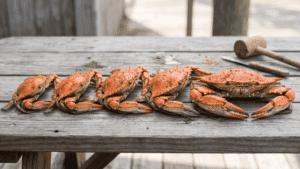
Walk into any crab house or market, and you’ll hear the same words: medium, large, and jumbo. These are the most common grades, and they describe the width of the shell from point to point.
| Grade | Typical Shell Width | Best For |
|---|---|---|
| Medium | Roughly 5 inches | Budget meals, casual picking, kids and beginners |
| Large | Roughly 5.5 to 6 inches | A good balance of price and meat |
| Jumbo | Roughly 6 inches and up | Special occasions, serious crab lovers |
These measurements are approximate. Every seller grades a little differently, and the sizes available change through the year. Early in the season, you may find very few big crabs. By late summer, large and jumbo become much easier to find.
Males, Females, and Why It Matters
Size is only part of the story. Male crabs, called jimmies, are usually the largest and meatiest. Mature females, called sooks, are smaller but are often prized in the fall for their rich roe. Younger females, sometimes called sallys, are smaller still. A seller who can tell you what’s in the pot has probably paid attention to the details.
Heavy for Its Size
A crab’s weight tells you more than a ruler. If you can pick one up, it should feel solid. A light crab often means a thin body and more water than meat, no matter how big it looks.
Where to Find Jumbo Maryland Crabs
A jumbo crab is a treat. The meat comes in big, tender lumps, and the claws are packed. But because they’re scarce and in high demand, finding them takes a bit of effort.
- Go in the right months. Late summer and early fall are your best bets.
- Call ahead. Ask whether jumbos are available that day and what the current price is. Supply can change from morning to evening.
- Visit seafood markets and busy crab houses. High-volume sellers often get the best catch first.
- Ask about the source. Staff who know where their crabs came from usually take their sourcing seriously.
- Be flexible. If jumbos aren’t available, a few large crabs can still make a great meal.
- Order early for events. For holidays or parties, call days in advance so the seller can set some aside.
Expect to pay noticeably more per dozen for jumbos, since the price follows the market. Always confirm the price and size before you pay.
Choosing the Right Size for Your Meal
Bigger isn’t always better. Here’s a quick way to match size to the situation.
- Casual weeknight dinner: Mediums or larges keep the cost reasonable and the pace relaxed.
- Backyard party with a mix of guests: Larges are the crowd-pleaser, with a few jumbos for the serious pickers.
- A special celebration: Jumbos make it feel like an occasion.
- A group of first-timers: Start with mediums or larges. Picking takes practice, and smaller crabs are less intimidating.
- A tight budget: Order more mediums and fill out the table with corn, soup, and sides.
How Much to Order
A good starting point is about six large crabs per adult, or a dozen for big appetites. If you’re choosing jumbos, you can often order fewer, since each one carries more meat. Sides like corn, fries, and soup reduce the number you need.
New crab pickers often eat less than they expect because the work is slow. It’s better to start modestly and add a few more than to be stuck with a heap of cold crabs.
What Affects the Price
Crab prices follow the market, and several factors push them up or down:
- Size. Bigger crabs cost more per dozen.
- Time of year. Early-season and late-season crabs often cost more because supply is lower.
- Weather and harvest conditions. A cold spring or a rough season can tighten supply.
- Demand. Holiday weekends, especially the Fourth of July, drive prices up.
- Where you buy. Waterfront restaurants usually charge more than carryout counters and seafood markets.
To save money, buy by the dozen or half bushel, shop in peak months, and compare a few sellers with quick phone calls.
A Quick Guide to Eating Your Crabs
If you’re new to picking, here’s the basic method:
- Twist off the claws and legs. Set them aside.
- Remove the apron. Pull the flap on the belly.
- Lift the top shell. Use your thumb to pry it up.
- Clean the body. Remove the feathery gills and, if you like, the yellow mustard.
- Break the body in half. The chambers hold the best lumps of meat.
- Pick the meat. A small knife helps, but fingers work too.
- Crack the claws gently. A light tap with a mallet is enough.
Take your time. A good crab feast is meant to be slow.
Common Mistakes to Avoid
- Showing up without calling ahead. Availability, sizes, and hours change often.
- Judging only by size. A heavy large can beat a light jumbo.
- Ordering too few. Leftover crab meat is easy to use, but running out is a letdown.
- Letting crabs sit. They’re best eaten hot, shortly after steaming.
- Ignoring the price. Confirm the size and cost before you pay.
Frequently Asked Questions
When is the best time of year to eat crabs?
Late summer through early fall is generally the best window. Crabs are heavier, supply is steady, and flavor is at its peak. September is a favorite among many locals.
What are the standard Maryland crab sizes sellers use?
Most sellers use medium, large, and jumbo, based on the width of the shell. The exact cutoffs vary, so ask each seller how they grade and what size they have that day.
Are jumbo crabs always worth the extra money?
Not always. Jumbos are wonderful for special occasions and for people who love big lumps of meat. For casual meals or large groups, large crabs often give the best balance of value and enjoyment.
Can I buy crabs in the winter?
Yes, but availability changes. Some shops stay open year-round and serve crab cakes, soups, and other seafood, while some sell crabs from other regions. Ask where the crabs come from if local matters to you.
How should I store leftover crabs?
Pick the meat as soon as you can, place it in a sealed container, and refrigerate it. Use it within a day or two for crab salad, omelets, or pasta.
Final Thoughts
Great crab comes down to two decisions: when you buy and what size you choose. Learn the rhythm of Maryland crab season, ask honest questions, and pay attention to weight as much as width. Spend a little extra on jumbo Maryland crabs when the occasion deserves it, and save with mediums or larges when you’re feeding a crowd.
So call ahead, set out the paper, and pick up your mallet. The best crab night is the one you planned with a little knowledge and a lot of patience. Explore Cravin’ Crabs for your next Maryland crab experience.