Beyond the Shell What Makes Maryland Blue Crab Meat So Distinctive
There is a reason Maryland blue crabs occupy such an important place in Baltimore’s seafood culture. For people who grew up around the Chesapeake Bay, a steamed crab feast is not simply another way to eat seafood. It is a regional tradition built around the crab itself: the shell, the seasoning, the aroma, the picking process, and most importantly, the delicate meat inside.
But what makes Maryland blue crab meat distinctive?
The answer is more nuanced than simply saying that Maryland crabs taste better. The characteristics of blue crab meat are influenced by the species, the crab’s environment, its growth cycle, seasonality, handling, and preparation. Chesapeake blue crabs have also become closely associated with Maryland’s culinary identity, which has helped shape the way local seafood lovers enjoy them. For anyone interested in understanding Maryland crab meat beyond the shell, these are the factors that matter.
What Is Maryland Blue Crab Meat?
Maryland blue crab meat comes from the Atlantic blue crab, Callinectes sapidus, a species native to the western Atlantic and commonly found throughout the Chesapeake Bay. The Chesapeake Bay provides important habitat for blue crabs at different stages of their life cycle. Juvenile crabs use shallow areas and submerged vegetation as habitat, while adult crabs occupy broader areas of the Bay and its tributaries. Their movements and distribution change with seasons, water temperatures, salinity, reproduction, and other environmental conditions.
That natural relationship with the Chesapeake is central to the identity of Chesapeake crab meat. Maryland’s seafood culture developed around harvesting and preparing these blue crabs, eventually producing the steamed-crab traditions associated with Baltimore and communities throughout the state. At the table, however, the scientific identity of the crab becomes much simpler: crack the shell, pick the meat, and taste what is inside.
The Natural Flavor of Sweet Blue Crab Meat
One of the most recognizable characteristics of sweet blue crab meat is its delicate natural flavor. Unlike seafood with a particularly strong or oily taste, blue crab meat can have a mild, subtly sweet character with a tender texture. The flavor can vary depending on the crab’s condition, diet, environment, maturity, handling, and preparation. That is also why seasoning matters so much in Maryland crab culture. Traditional steamed crabs are generally seasoned heavily enough to create an aromatic, savory exterior without completely masking the crab’s natural character. When the shell is opened, the seasoning, crab juices, and meat come together to create the flavor profile people associate with a Maryland crab feast. The result is not just “spicy seafood.” A properly prepared crab allows the seasoning and natural crab flavor to work together.
Why the Chesapeake Bay Matters
The Chesapeake Bay is not simply a geographic label attached to Maryland crabs. It is a major estuarine ecosystem that supports a wide variety of aquatic species, including blue crabs. Blue crabs are adapted to changing salinity and temperature conditions, and their distribution within the Chesapeake changes during the year. According to the Chesapeake Bay Program, blue crabs use different parts of the Bay throughout their life cycle, with females migrating toward higher-salinity waters near the lower Bay for spawning. These environmental conditions are part of the story behind Chesapeake crab meat. However, it is important not to oversimplify the relationship between geography and taste. A crab’s origin is only one factor affecting the final eating experience. Harvest timing, crab condition, storage, transportation, steaming, and seasoning can all influence quality. For seafood customers, “Maryland blue crab” therefore represents both a specific species and a long-established regional seafood tradition.
Freshness and Crab Meat Quality Go Hand in Hand
When evaluating crab meat quality, freshness and handling are fundamental.
Crabs are highly perishable seafood. Once harvested, proper handling and temperature control become important for maintaining quality. For live crabs, vitality is an obvious consideration. For steamed crabs, preparation and timely consumption become equally important.
This is one reason experienced crab buyers pay attention to the condition of the crabs before focusing only on price.
A fresh, properly handled crab should provide an appealing aroma and enjoyable meat texture after preparation. The meat should complement the seasoning rather than being overwhelmed by it.
For customers looking for fresh crab meat Baltimore seafood businesses offer, it is useful to consider more than the phrase “fresh.” Ask about current availability, sourcing, preparation, and whether the crab is being offered live or already steamed.
Those details provide a much clearer picture of what you are actually ordering.
Maryland Crab Meat Is More Than One Type of Meat
There is another reason Maryland crab has such a distinctive culinary reputation: there is a surprising amount of variety in what can be found inside a single crab.
Depending on the part of the crab, the meat can differ in size, texture, and appearance.
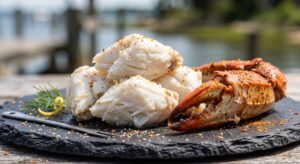
The body contains smaller pieces of meat, while the larger chambers contain meat that can be picked in more substantial portions. The claws also provide darker meat with its own texture and flavor characteristics.
When commercial crab meat is picked and sold separately, processors commonly distinguish types such as jumbo lump, lump, backfin, and claw meat. These categories are useful when discussing prepared dishes such as crab cakes, dips, soups, and salads.
But steamed whole crabs offer something different: the complete crab-picking experience.
Instead of receiving pre-picked meat, customers open the shell and discover the different textures and portions themselves.
That is an important part of Maryland’s crab tradition.
Steamed Crab Meat Has a Different Appeal
Steamed crab meat is inseparable from the Maryland crab-house experience.
Steaming allows the crab to cook while retaining the character of the meat inside the shell. Seasoning applied during preparation creates a savory exterior, while the meat inside remains comparatively delicate.
The process also makes the meal interactive.
A steamed crab is not designed to be eaten with a fork and finished in five minutes. Cracking, cleaning, picking, and eating are all part of the experience. That slower process is one reason crab feasts work so well for family meals and gatherings.
Cravin’ Crabs offers steamed Maryland blue crabs in several sizes, allowing customers to select different crab options depending on appetite and occasion. The current menu also includes live crabs for customers who prefer to prepare them themselves.
For someone searching for a traditional Baltimore crab house, that combination provides two distinct ways to enjoy the same regional seafood tradition.
Size Can Influence the Eating Experience
Crab size is another important part of the conversation about Maryland crab meat.
A larger crab does not necessarily mean that every bite will automatically be better. However, size affects the amount of meat available and can influence how substantial the meal feels.
Cravin’ Crabs currently lists male crabs in several size categories, ranging from regular and medium to large, extra-large, and jumbo. Female crabs are also offered in multiple size categories.
This gives customers more flexibility when building an order.
Someone ordering dinner for two may choose a particular size and quantity based on appetite. A family or larger gathering may prefer a half-bushel or bushel rather than ordering individual dozens.
The important point is to think about size together with quantity and the rest of the meal.
If you are also ordering shrimp, crab legs, corn, potatoes, or other seafood, you may need fewer crabs than you would for a meal centered exclusively around steamed crabs.
Seasonality Is Part of the Maryland Crab Story
Blue crabs are strongly associated with Maryland’s warmer months, but the actual crab season is governed by biological conditions and Maryland’s harvesting regulations.
The state’s Chesapeake Bay regulations establish specific seasons and size requirements for commercial hard-crab harvesting, with current regulations listing April 1 through November 30 as the commercial hard-crab season.
During the local season, Maryland and Chesapeake Bay sourcing becomes particularly relevant to customers seeking fresh Maryland crabs.
But availability at a seafood business does not necessarily stop when the local commercial season ends.
Cravin’ Crabs states that most of its crabs are locally caught from Maryland and the Chesapeake Bay and that Louisiana crabs are sourced during the off-season. This allows the business to continue offering crab throughout the year while recognizing the difference between local seasonal sourcing and off-season supply.
For customers, this is an important distinction.
Instead of assuming that every crab available in Baltimore comes from the Chesapeake at every point in the year, ask about current sourcing if local origin is important to you.
Maryland Blue Crab Flavor Starts Before the Seasoning
It is easy to associate Maryland crab flavor entirely with seasoning, but seasoning is only part of the equation.
The crab itself comes first.
The crab’s natural flavor depends on its species, habitat, diet, maturity, physiological condition, and other biological factors. Handling and preparation then determine how much of that natural character reaches the plate.
This is why experienced seafood lovers often pay attention to the crab before they even begin eating.
They may look at size, shell condition, overall appearance, aroma, and how the crab has been prepared. Once the shell is opened, the texture and flavor of the meat become the final test.
For a quality crab feast, the seasoning should enhance the seafood rather than serve as a substitute for it.
Maryland Crab Culture Is About the Experience, Too
One of the most interesting things about Maryland crab is that the product and the tradition are difficult to separate.
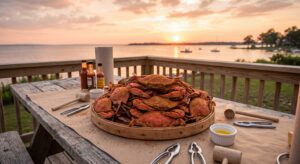
A pile of steamed blue crabs on a table creates a very different experience from a container of pre-picked crab meat.
With whole crabs, people gather around the food. Newspaper or paper-covered tables become part of the setup. Crab mallets and picks appear. Conversation continues while shells are cracked and meat is pulled from the body and claws.
That is why Maryland crab feasts remain such a recognizable part of Baltimore-area food culture.
The experience also makes whole steamed crabs particularly suitable for takeout. Instead of needing a formal dining room, customers can bring the feast home, spread out the crabs, add their preferred sides, and enjoy the meal at their own pace.
Maryland Blue Crab Meat Beyond Steamed Crabs
Whole steamed crabs may be the most recognizable way to experience Maryland blue crabs, but crab meat appears in many other dishes.
Crab cakes are one of the most famous examples. Soups, crab dips, salads, and other seafood preparations also use picked crab meat in different ways.
Cravin’ Crabs currently offers lump crab cakes, crab dip, shrimp salad, crabby eggs, and Maryland crab soup among its broader seafood selection.
These dishes demonstrate another side of Maryland seafood.
Instead of making the shell the centerpiece, they allow crab meat to become an ingredient within a prepared dish. The texture, meat category, seasoning, and supporting ingredients then become important parts of the final product.
For someone who loves Maryland crab but wants something different from a traditional steamed-crab order, these options can provide another way to enjoy the flavor.
How to Choose Maryland Crab Meat for Your Next Meal
If you are ordering Maryland blue crabs or another crab-based seafood dish, consider these practical factors:
Ask about sourcing. If Chesapeake or Maryland origin matters to you, confirm where the current crabs were sourced.
Choose an appropriate size. Think about the number of people eating and whether crabs will be the entire meal or part of a larger seafood spread.
Consider live versus steamed. Live crabs give you the option to prepare them yourself, while steamed crabs provide a ready-to-enjoy meal.
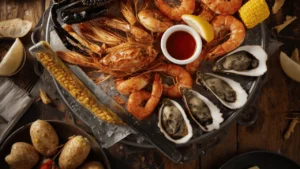
Look beyond the crab itself. Shrimp, corn, potatoes, crab legs, oysters, and other seafood can turn a crab order into a more complete spread.
Order according to the occasion. A dozen may work for a smaller meal, while a half-bushel or bushel can make more sense for a larger gathering.
Ask about current availability. Crab sourcing and size availability can change throughout the year.
These simple questions can make the ordering process much easier, particularly for customers who are new to Maryland crab culture.
Enjoy the Maryland Blue Crab Tradition with Cravin’ Crabs
The appeal of Maryland blue crab meat comes from several elements working together. The Atlantic blue crab itself, the Chesapeake Bay environment, seasonal availability, careful handling, steaming, seasoning, and Maryland’s long-standing crab traditions all contribute to the experience. There is no single characteristic that explains everything. For Baltimore-area seafood lovers, however, the result is easy to recognize: crack the shell, uncover the meat, and experience one of Maryland’s most distinctive seafood traditions. Cravin’ Crabs offers steamed and live crabs along with shrimp, oysters, crab cakes, crab legs, soups, corn, and other seafood favorites. Its current operation is focused on carryout, allowing customers to take their seafood home and enjoy a Maryland-style feast on their own table. Located at 4609 Annapolis Rd, Halethorpe, MD 21227, Cravin’ Crabs gives local customers a convenient way to order Maryland-style seafood without needing a dine-in experience. When you are ready for your next crab feast, check the current crab selection, choose the size and quantity that fit your meal, and bring home the flavor that has made Maryland blue crabs a Baltimore-area tradition.
Call Cravin’ Crabs at (410) 636-2722 to ask about current crab availability and place your order.